» » Renaissance - Turn Of The Cards
Renaissance  - Turn Of The Cards mp3 album

Renaissance - Turn Of The Cards

Musician: Renaissance
Album title: Turn Of The Cards
Style: Prog Rock, Symphonic Rock
Released: 1974
Country: UK & Europe
Size MP3 version: 1579 mb
Size APE version: 1699 mb
Size WMA version: 1206 mb
Rating ✫: 4.6
Votes: 281
Format: MMF DXD WAV MOD ADX VOC AHX
Genre: Rock

Renaissance - Turn Of The Cards mp3 album

Renaissance  - Turn Of The Cards mp3 album

Tracklist

Running Hard 9:37
I Think Of You 3:07
Things I Don't Understand 9:29
Black Flame 6:23
Cold Is Being 3:00
Mother Russia 9:18

Versions

Category Artist Title (Format) Label Category Country Year
BTM 1000, RCA BTM 1000 Renaissance Turn Of The Cards ‎(LP, Album) BTM Records, BTM Records BTM 1000, RCA BTM 1000 UK & Europe 1974
7502 M Renaissance Turn Of The Cards ‎(8-Trk, Album) Sire 7502 M US 1974
M5 6015 Renaissance Turn Of The Cards ‎(Cass, Album) Sire M5 6015 US 1974
BTM 1000, RCA BTMK 1000 Renaissance Turn Of The Cards ‎(Cass, Album, Dol) BTM Records, BTM Records BTM 1000, RCA BTMK 1000 UK & Europe 1974
BTM 1000 Renaissance Turn Of The Cards ‎(LP, Album) RCA Victor BTM 1000 France 1974
BTM 1000, RCA BTM 1000 Renaissance Turn Of The Cards ‎(LP, Album) RCA Victor, BTM Records BTM 1000, RCA BTM 1000 Israel 1974
BTM 1000 Renaissance Turn Of The Cards ‎(LP, Album) BTM Records BTM 1000 Italy 1974
9147-7502 Renaissance Turn Of The Cards ‎(LP, Album) Sire 9147-7502 Canada 1974
SAS-7502 Renaissance Turn Of The Cards ‎(LP, Album) Sire SAS-7502 US 1974
BTM 1000 Renaissance Turn Of The Cards ‎(LP, Album) RCA Victor BTM 1000 France 1974
SAS-7502 Renaissance Turn Of The Cards ‎(LP, Album) Sire SAS-7502 US 1974
BTM 1000, 26.21490 AS Renaissance Turn Of The Cards ‎(LP, Album) RCA Victor, RCA Victor BTM 1000, 26.21490 AS Germany 1974
BTM 1000, RCA BTM 1000 Renaissance Turn Of The Cards ‎(LP, Album) BTM Records, BTM Records BTM 1000, RCA BTM 1000 UK & Europe 1974
SAS-7502 Renaissance Turn Of The Cards ‎(LP, Album) Sire SAS-7502 US 1974
VPL 1-4012, BTM-100 Renaissance Turn Of The Cards ‎(LP, Album) RCA Victor, BTM Records VPL 1-4012, BTM-100 Australia 1974
SAS-7502 Renaissance Turn Of The Cards ‎(LP, Album) Sire SAS-7502 US 1974
BTM 1000 Renaissance Turn Of The Cards ‎(LP, Album) RCA Victor BTM 1000 Israel 1974
BTM 1000, RCA BTM 1000 Renaissance Turn Of The Cards ‎(LP, Album) BTM Records, BTM Records BTM 1000, RCA BTM 1000 UK & Europe 1974
SAS-7502 Renaissance Turn Of The Cards ‎(LP, Album, Promo) Sire SAS-7502 US 1974
SR 6015 Renaissance Turn Of The Cards ‎(LP, Album, RE) Sire SR 6015 US 1974
SR 6015 Renaissance Turn Of The Cards ‎(LP, Album, RE, Win) Sire SR 6015 US 1974
RCA-6299, BTM-1000 Renaissance Turn Of The Cards ‎(LP, Album) RCA, RCA RCA-6299, BTM-1000 Japan 1975
BTM-1000 Renaissance Turn Of The Cards ‎(LP, Album) RCA Victor, BTM Records BTM-1000 Spain 1975
PL70860 Renaissance Turn Of The Cards ‎(LP, Album) RCA PL70860 Europe 1985
REP 4491-WY Renaissance Turn Of The Cards ‎(CD, Album, RE) Repertoire Records REP 4491-WY Germany 1994
MSIF-7240, REP 4491-WY Renaissance Turn Of The Cards ‎(CD, Album, RE) MSI , Repertoire Records MSIF-7240, REP 4491-WY Japan 1994
TRC 042 Renaissance Turn Of The Cards ‎(CD, Album, RE) TRC Records TRC 042 Germany 1994
HTD CD 51 Renaissance Turn Of The Cards ‎(CD, Album, RE) HTD Records HTD CD 51 UK & Europe 1996
RNSCOLCD 005 Renaissance Turn Of The Cards ‎(CD, Album, RE, Unofficial) 24 Bit Remasters RNSCOLCD 005 Russia 2000
SV-617 Renaissance Turn Of The Cards ‎(CD, Album, Unofficial) Private Area SV-617 Russia 2000
ARC-7016 Renaissance Turn Of The Cards ‎(CD, Album, RE, RM, Pap) Arcàngelo ARC-7016 Japan 2002
ARC-7016 Renaissance Turn Of The Cards ‎(CD, Album, RE, RM, Unofficial, Pap) Arcàngelo ARC-7016 Russia 2002
COL-CD-7784 Renaissance Turn Of The Cards ‎(CD, Album, RE) Collectables COL-CD-7784 US 2006
REP 5079 Renaissance Turn Of The Cards ‎(CD, Album, RE, Car) Repertoire Records REP 5079 Germany 2006
AIRAC-1533 Renaissance Turn Of The Cards ‎(CD, Album, RE, RM, Pap) Air Mail Archive AIRAC-1533 Japan 2009
V133, REP 2238 Renaissance Turn Of The Cards ‎(LP, Album, RE, RM) Repertoire Records, Repertoire Records V133, REP 2238 Germany 2015
REP 4491-WY Renaissance Turn Of The Cards ‎(CD, Album, RE) Repertoire Records REP 4491-WY Germany Unknown
none Renaissance Turn Of The Cards ‎(CD, Album, Unofficial) ООО "ДОРА" none Russia Unknown
1238 Renaissance Turn Of The Cards ‎(Cass, Album, Unofficial) 501 1238 Unknown
26.21490, BTM 1000 Renaissance Turn Of The Cards ‎(LP, Album, RE) RCA, BTM Records 26.21490, BTM 1000 Germany Unknown
BTM 1000, 26.21490 Renaissance Turn Of The Cards ‎(LP, Album, RE) BTM Records, RCA Victor BTM 1000, 26.21490 Germany Unknown
SR 6015 Renaissance Turn Of The Cards ‎(LP, Album, RP, Wit) Sire SR 6015 US Unknown

Tracklist

1 Running Hard 9:37
2 I Think Of You 3:07
3 Things I Don't Understand 9:29
4 Black Flame 6:23
5 Cold Is Being 3:00
6 Mother Russia 9:18

Companies, etc.

  • Distributed By – Pinnacle
  • Published By – Pytheon Music
  • Recorded At – The Music Centre, Wembley
  • Remixed At – Mediasound

Credits

  • Acoustic Guitar, Vocals, Music By – Michael Dunford
  • Arranged By, Producer – Renaissance
  • Bass, Vocals – Jon Camp
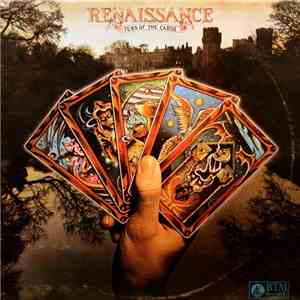
  • Cover, Photography By – Hipgnosis
  • Drums, Percussion, Vocals – Terry Sullivan
  • Engineer [Remix] – Jeffrey Lesser
  • Keyboards – John Tout
  • Lead Vocals – Annie Haslam
  • Lyrics By – Betty Thatcher
  • Producer – Richard Gottehrer
  • Producer, Engineer – Dick Plant

Barcode and Other Identifiers

  • Barcode: 5023387005128

Other versions

Category Artist Title (Format) Label Category Country Year
BTM 1000, RCA BTM 1000 Renaissance Turn Of The Cards ‎(LP, Album) BTM Records, BTM Records BTM 1000, RCA BTM 1000 UK & Europe 1974
ARC-7016 Renaissance Turn Of The Cards ‎(CD, Album, RE, RM, Unofficial, Pap) Arcàngelo ARC-7016 Russia 2002
26.21490, BTM 1000 Renaissance Turn Of The Cards ‎(LP, Album, RE) RCA, BTM Records 26.21490, BTM 1000 Germany Unknown
PL70860 Renaissance Turn Of The Cards ‎(LP, Album) RCA PL70860 Europe 1985
BTM 1000 Renaissance Turn Of The Cards ‎(LP, Album) RCA Victor BTM 1000 France 1974


spark
If you are curious about this band and are into progressive rock; This LP would be a good place to start.
I'm a Russian Occupant
Interesting that my own item have no leader tape on the both sides.
Jogrnd
What makes a band orchestral? Is it playing with an orchestra? On this 1974 release, Renaissance sure do a lot of that. Classical influence? Even putting aside that parts of this album, including an entire song, are classical quotations, Renaissance are inarguably classically oriented. But just because your rock band plays the main theme of the “Ode to Joy” on repeat at full blast for eleven minutes with a string section, I’m not necessarily going to feel comfortable labeling it ‘orchestral’. What the great symphonic composers all had was a great feel for the range of their ‘instrument’; music which feels orchestral demonstrates amazing instrumentation and arrangement. Master orchestrators can coax a sound never heard before by human ears out of a centuries-old ensemble, just in the way they instruct each individual to play. And so any band which uses the forces at their disposal in such a way that they seem to be more than the sum of their parts I would label ‘orchestral’.As mentioned before, the forces that Renaissance have at their disposal here include an orchestra with arrangements by Jimmy Horowitz, as well as the core group of John Tout on keyboards acoustic and otherwise, Annie Haslam on vocals, John Camp bass and vocals, Terence Sullivan on drums and vocals, and Michael Dunford on guitars (specified as only acoustic!) and vocals (this is the seemingly arbitrary order of the band’s credits on the reverse of the cover, and I reproduce it here as a minor curiosity; I have no possible explanation for it other than possibly the order in which you’d miss the members if they weren’t playing?). I’ve heard bands do a ton with just the main instrumental section they’re bringing; they have four vocalists to work with; and, of course, an orchestra (with strings, winds, brass, tympani, and even harp, that I could hear). We’ll get to the question of whether their management of these forces is orchestral, but note: with so much going on, they will need to be, or else it’s going to be an absolute mess.Before we get into questions of arrangement and performance, though, let’s look at the material that they’re working with. Just looking at the song lengths quoted in the track listing is enough to know that you can lump these guys in with the greater 70s prog phenomenon, with three nine minute numbers (and note that they can’t get anything done in less than three minutes’ time). However, their influences and style are refreshingly different from many of their famous contemporaries. For one thing, there’s relatively little blues influence here, and they can actually get by without a backbeat for long stretches of these tracks. They certainly have a fair helping of the classical influence which was in the air at the time, but they’re coming at it from a different direction from bands who seemingly just wanted to upset Holst. A lot of the influence seems to be from French impressionistic composers; rather than striking and strident German harmony, they have naïve Debussy harmony, with all the corners rounded off. And they can be jazzy, but sort of the way Ravel can be jazzy, with modal figures grinding against each other to create unusual chords. When they want something heavier, they go a bit Russian, using scales with striking altered tones in repetitive plodding builds. And the core of the songwriting seems closer to a simple but melodic folk style than heavy-hitting rock. Basically, they’re putting different weird stuff over a backbeat than their contemporaries, which alone makes them worth checking out if you’re into that sort of thing.The actual songs, though, are largely quite simple. Two of the nine minute songs, “Mother Russia” and “Running Hard”, are essentially ABA(B)CAB. There will be some big introduction which warms up the orchestra, then it’s a two section song with the orchestra filling out the sound (and despite the somewhat novel harmony and other prog tricks, the core songs are quite simple, folkish things themselves); the bridge gets extended into some repetitive thing with the orchestra, then they come back with the song to end it. Of the two, “Mother Russia” hangs together thematically a bit better, and even so there isn’t necessarily anything concrete you could point to that holds the sections together. Any time you’re coming into or out of an instrumental section, there tends to be a big seam showing, and the arrangements don’t tend to reuse the themes they introduce. There are some well produced moments, such as the much less frantic, acoustic guitar-driven reprise of the A section in “Running Hard” coming out of the bombastic bridge; however it’s a bit much to swallow, that the huge, dramatic orchestral build you just heard had no meaning or purpose other than to exist and to make the verse sound cool when it comes in a lot quieter. Sure, this is music, what is any of it supposed to mean anyway? The hair raising end of the intro to “Mother Russia”, with its ominous march and trumpet calls is almost worse, as beyond not coming back or being reflected in any way later in the piece, it loses all momentum before unceremoniously jumping into the first verse. The point is, there are other bands who do a better job of giving their long numbers a self-explanatory and vital arc. With Renaissance, at least on this release, you pretty much just have to bank on getting lost in the moment and finding joy in the pure sound, because the structures don’t go much beyond putting one thing after another in a way that keeps the flow moving along; they’re mostly successful in that, but as I've mentioned, there are some unfortunate seams that show along the way.And what of the sound? Well, a lot of the elements get a number of chances to shine. First, the band with four voices uses them all greatly to its advantage; Haslam’s excellent delivery of the lyrics is often padded out nicely with harmonies, and the four voices together are used well to fill out chords and even provide their own type of unique effect as if they are their own instrument (the end of the bridge in “Running Hard” is a good example, with the vocal lines playing off against the harp runs). What’s especially nice, and I only wish there was more of it here, is when Haslam gets an opportunity to sing during the instrumental bridges, blending high vocal parts in with the orchestra, as she does on the closing track of each side. At times, a comparison with the soaring, wordless soprano solos of Ennio Moricone’s scores is inevitable, and Haslam clearly has the chops to pull off that sound. Honestly, I just wish there was more of that, as her voice is the most unique and powerful asset the band have at their disposal.The rhythm section of Camp and Sullivan is quite competent, and shine in the rarer heavy moments; they tend to get a bit lost in the shuffle of the bits where the orchestra takes over. Sullivan’s parts unfortunately underline the repetitive nature of these sections; I can almost imagine he’d have just liked to have a solid groove to play through more of this record, as he doesn’t take too many chances playing with the orchestra. He does, however, have some very nice beats to offer on tracks with less of the orchestra. His best moment might be his handling of the odd time signature in the chorus of “Black Flame”, showing that he can provide a strong groove without resorting to any kind of backbeat.Tout is actually the one pulling a lot of the weight in creating the sound for this record, and he’s all over it. Besides filling out the harmony and rhythm with his piano playing, he’s able to out-pluck Dunford with his harpsichord, and on tracks that the orchestra sits out, it’s his duty to fill out the sound with organ. It’s hard to tell in a record with so many instruments, but I believe there may even be some synth in there. Dunford’s acoustic guitar is crucial in the moments you’d expect, the quieter ones where the bands folk side is most prominent. His insistence on the instrument does provide some problems for a band which, for the most part, is trying to create quite a smooth wall of sound throughout. Basically, and acoustic guitar is a strummy, strangy instrument, and is quite percussive. “Things I Don’t Understand” is a fun track because it shows what the group can do without the orchestra behind them (and a lot of what they can do is overdub Tout). Dunford has some nice moments, but his strumming through the chords in some sections just throws off the smooth sound they’re going for and interferes with the groove that Sullivan and Camp create. Dunford is actually out for long stretches of the album, but he apparently wrote all the music, so I’m sure he’s not too worried.Now, just in talking about the core group of the band, the orchestra has to come up a little because a lot what each player is doing is trying to interact successfully with it, but let’s see how the orchestra fares in interacting with the band. Horowitz’s arrangements are certainly competent; there are no clunkers from the pit which disrupt the even flow of the music. However, they are also not really adventurous or striking, which isn’t too surprising when your job is to fill out the songs of a folk rock band. But the way the songs are put together, there are several long passages that lean entirely on the orchestra. These sections subsequently don’t have quite the variety to maintain interest all the way through; you’ll notice them repeating a few times before they finally wind down. “Mother Russia” has several great moments with the orchestra, and they integrate especially well with the song sections because of the bombastic counterpoint they’re allowed to provide. The conclusion I have to reach is that Renaissance is not the consummate band to define the word ‘orchestral’. They have their struggles, and they’re playing with forces that, at least for this release, somewhat escape them. However, note also one of the shorter tracks without orchestra, “I Think Of You”. For the most part, it’s a well executed, simple song, but by the end they’ve overdubbed so much of Tout that the wall of sound is indistinguishable from what you get with the orchestra, and it ends up disappointingly muddy.One thing I haven’t mentioned which does provide them with a bit of a boost is Betty Thatcher’s excellent lyrics. These have a very poetical bent, and so you get lines which seem like they’d stand fine on their own, with nary a triumphant “Yeah!” in sight, which suits the band quite well, although in one or two spots the meter is a bit tricky (the chorus of “Things I Don’t Understand” just has the band spitting syllables at an unmannered rate). Her lyrics use simple and direct metaphor which is a lot more accessible than the abstract and absurd, or baroque and stuffy, lyrics you sometimes have to tune out in prog epics. Thatcher deserves special mention for “Cold Is Being”, an arrangement of a famous Tomaso Albinoni piece for organ and voice. Putting words to an old, recognizable classical tune while your keyboard player accompanies you is pretty much a party trick, but Thatcher’s lyrics just about justify the piece’s inclusion; while she normally manages sad or longing without descending into the morose, here she puts together a dirge whose words you might expect to see in a severe Victorian spinster’s needlepoint. “Black Flame” is also a standout moment lyrically, and is probably the best track on the album, with a slightly shorter, more coherent form, and some great playing all around. This is a release with a lot of interesting things to offer, and some of them are worth the price of admission just to see something a bit different. However, issues throughout with the production, as well as the band’s less than nuanced approach to composing their longer tracks, prevent it from living up to its potential.Let’s just take a quick look at the cover; it’s a nice little Hipgnosis design, and the tarot cards are fun to look at. No lyrical reproduction which would be quite nice, but the credits off to the sides at the bottom let you enjoy the artwork without getting in the way. Maybe that’s why they leave off a few important credits, such as Albonini, and which orchestra is all over the record, so that’s a bit of a shame.Watch for: I’ve actually covered a LOT of the material from the record, and there’s no extra fun or clever moment I really want to spotlight; however, one thing you might try is reversing the sides of the album when you listen, though I normally would never suggest messing with the artist’s presentation. “Black Flame” makes for a really strong opener, and while it has its problems, “Things I Don’t Understand” has the most interesting approach to a longer form on the album, making it a good closer, much more so than the predictable “Running Hard” and “Mother Russia”, which in this running order get smushed together in the middle. Plus, Tout’s intro quotation for “Running Hard” is a great way to open up the second side.
Fog
Wow--that's a whole bunch of words!!! I could listen to the entire album before I finished this! LOL--all respect good job!